BillCheck

Home / Resources / What is freight class, and how does a reclass change your LTL bill?

What is freight class, and how does a reclass change your LTL bill?

Published on November 16, 2026 · The BillCheck team · 6 min read

Freight class is the number from 50 to 500 that LTL carriers use to price a shipment. It comes from the National Motor Freight Classification (NMFC), and since Docket 2025-1 took effect on July 19, 2025, most items are classed by density alone, on a 13-step scale. A pallet at 15.0 pounds per cubic foot ships at class 70. At 14.9, it ships at class 85. That gap is where reclasses come from.

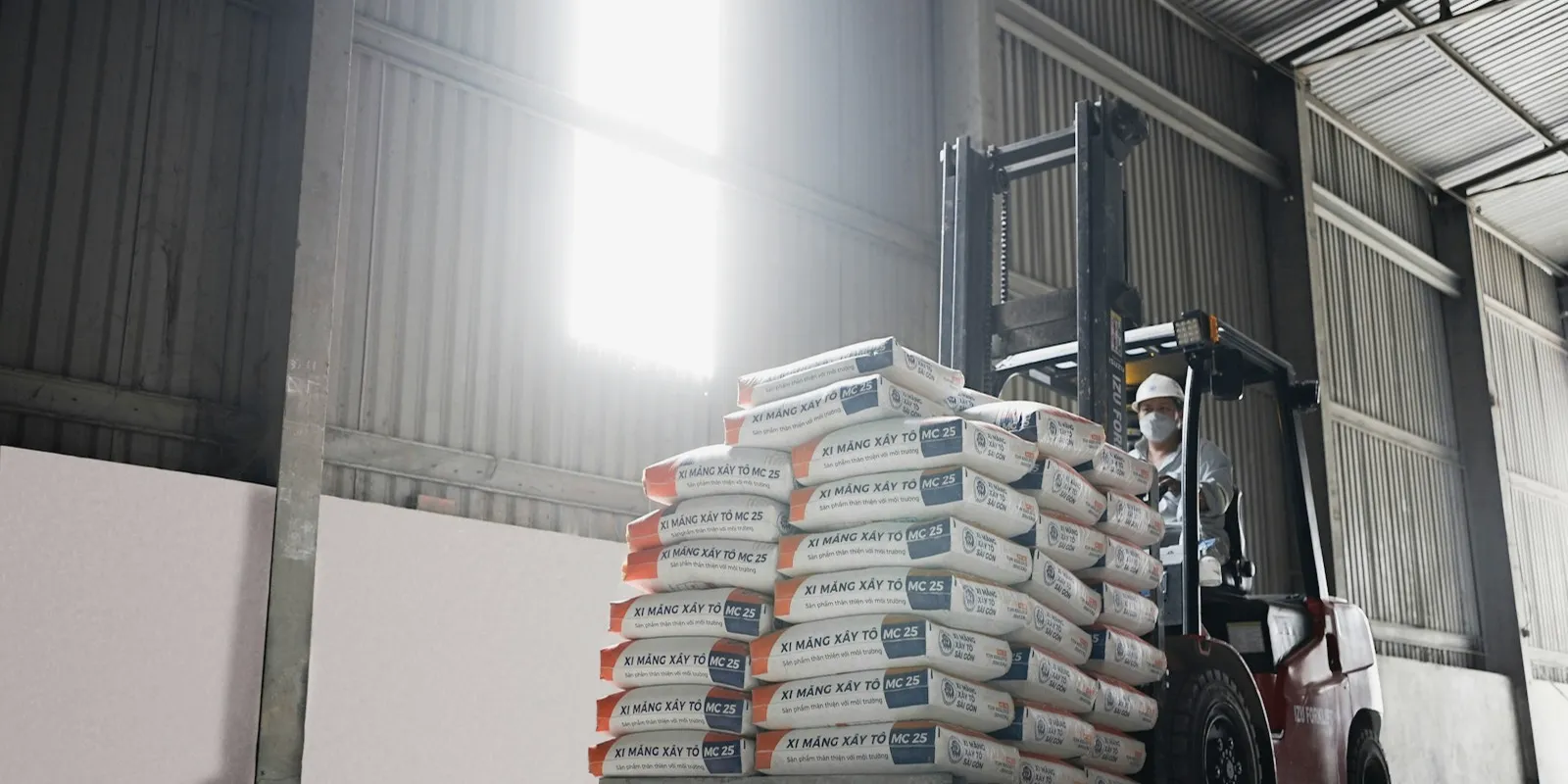
A forklift carrying a tall palletized load across a warehouse floor: the height of that stack sets its density, and its density sets its freight class
Photo Solømen, Unsplash

What is freight class, and who sets it?

Freight class is a rating from 50 to 500 published in the NMFC by the National Motor Freight Traffic Association (NMFTA). It reflects four transportation characteristics: density, handling, stowability and liability. Dense, easy freight gets a low class and a low rate per hundredweight. Light, awkward or fragile freight gets a high class. Your carrier's tariff then turns that class into a price for each lane and weight break.

Two numbers live on your bill of lading and they are not the same thing. The NMFC code (or item number) identifies the commodity: furniture, auto parts, plastic articles. The freight class is the rating that item carries. Some items have one fixed class. Most now point to the density scale, and the class depends on how the shipment was built that day.

Typically, the class on the invoice is the one the carrier applied, not the one you wrote. When they differ, the carrier has reclassed. That is a normal line in an LTL invoice audit, and it is one of the first we look for, because it changes the whole bill, not one accessorial.

What does the NMFC density scale look like since Docket 2025-1?

Since July 19, 2025, the standard density scale has 13 subprovisions instead of 11. The densest freight, 50 pounds per cubic foot (pcf) or more, lands in class 50. Then 35 to under 50 pcf is class 55, 30 to under 35 is class 60, and the breaks continue down to class 125 at 6 to under 8 pcf. Below 6 pcf, four more steps climb toward the top of the 50 to 500 range.

The table below lists the breaks we read at the source: the three new subprovisions in NMFTA's Docket 2025-1 FAQ, and the class gained at each threshold in NMFTA's guidance on density margin. Each threshold is a cliff. A shipment at exactly 15.0 pcf is class 70. One tenth below, it pays class 85 on the entire shipment.

The scale only applies to items that point to it. An item with its own handling, stowability or liability issues keeps a specific class. So the first check is always the item number, before any density math. NMFTA's free lookup and ClassIT+ give the item and its provisions.

NMFC standard 13-subprovision density scale, the 9 densest steps, as published by NMFTA (read November 16, 2026)

Density (pounds per cubic foot)Freight class
50 or more50
35 to under 5055
30 to under 3560
22.5 to under 3065
15 to under 22.570
12 to under 1585
10 to under 1292.5
8 to under 10100
6 to under 8125
Under 6Four more steps, higher classes (see ClassIT+)

How do you calculate freight class from density?

Measure the handling unit at its greatest length, width and height in inches, pallet and overhang included. Multiply the three and divide by 1,728 to get cubic feet. Divide the weight in pounds by the cubic feet: that is the density. Read the class off the scale. NMFTA's own example: a 48 x 40 x 45 inch pallet at 450 pounds is 50 cubic feet and 9 pcf, which falls in class 100.

Height is where it moves. Take a 48 x 40 inch pallet weighing 900 pounds. At 54 inches tall, it is 60 cubic feet and exactly 15.0 pcf: class 70. Stack it two inches higher and it is 14.46 pcf: class 85. Same product, same weight, a higher rate on every hundredweight.

In practice, this is also why a dock measurement and your packing list rarely match to the decimal. NMFTA notes that dimensioners and scales may read within a tolerance, about half an inch per side and roughly 5 pounds on the scale, and that those errors compound. Its advice to shippers: build loads at least 5% above the class threshold, closer to 6% for short, light pallets.

Density of one 48 x 40 inch pallet weighing 900 lb, by measured height
18.41 pounds per cubic foot
44 in (class 70)
16.88 pounds per cubic foot
48 in (class 70)
15.58 pounds per cubic foot
52 in (class 70)
15 pounds per cubic foot
54 in (class 70)
14.46 pounds per cubic foot
56 in (class 85)
13.5 pounds per cubic foot
60 in (class 85)

Source : BillCheck calculation with the NMFTA density method (greatest dimensions, divided by 1,728) and the class breaks of the 13-subprovision scale, NMFTA, read November 16, 2026

What changes on the invoice when a carrier reclasses?

A reclass touches at least three lines. The linehaul is rerated at the higher class. The fuel surcharge, a percentage of the linehaul, rises with it. And an inspection or reweigh fee often appears on top: FedEx Freight's 2026 rules tariff lists $40 for reweigh and inspection. NMFTA also points out that a reclass only moves toward a higher class, so every unfavorable reading lands on the shipper.

Look at the fuel surcharge line after a reclass. If the class is corrected but the fuel line keeps the old linehaul as its base, you are still overpaying. Same thing for any accessorial billed as a percentage.

The other trap is volume. One reclass on one pallet is a small number. The same pallet pattern shipped every week on the same lane, measured the same way at the same terminal, is a line that comes back every month. That is the pattern a freight audit catches and a monthly approval does not.

Parcel works differently: no class, a divisor instead. If your LTL bills also carry parcel lines, the dimensional weight rules are the ones to check there.

How do you check and dispute a freight reclass?

Ask the carrier for the inspection record: the three measured dimensions, the weight, the date and the terminal. Recompute the density yourself with the NMFTA method and compare it with your packing data and the class threshold. Check that the item number pointed to the density scale at all. Then contest in writing within 180 days of receiving the bill, the window 49 U.S.C. 13710 gives the shipper.

Most disputes are won or lost on the record. A reclass with no dimensions, or with dimensions that do not match the pallet you build every week, is hard for a carrier to defend. A reclass with a dimensioner photo showing a leaning stack is hard for you to fight: that one is a packaging fix, not an invoice error.

  1. 1

    Check the item

    Confirm the NMFC item number on the bill of lading and whether it uses the density scale or a fixed class.

  2. 2

    Get the inspection record

    Request the measured length, width, height, weight, date and terminal behind the reclass.

  3. 3

    Recompute density

    Greatest dimensions in inches, multiplied, divided by 1,728, then weight divided by cubic feet. Compare with the scale.

  4. 4

    Rebuild the bill

    Rerate the linehaul at the right class and recompute the fuel line and any percentage accessorial on that base.

  5. 5

    Contest in writing

    Send the dispute with your numbers within 180 days of receiving the bill, and track the credit to the next statement.

How to check a freight reclass on an LTL bill

  1. Confirm the NMFC item number and whether it uses the density scale.
  2. Request the inspection record: dimensions, weight, date and terminal.
  3. Recompute density: greatest dimensions in inches multiplied, divided by 1,728, then weight divided by cubic feet.
  4. Rerate the linehaul at the right class and recompute the fuel line on that base.
  5. Contest in writing within 180 days of receiving the bill.

Frequently asked questions

What freight class is my shipment?

Start with the NMFC item number for what you ship. If the item has a fixed class, that is your class. If it points to the density scale, measure the handling unit as tendered, compute pounds per cubic foot and read the class: for example, 15 to under 22.5 pcf is class 70, and 8 to under 10 pcf is class 100. Your carrier contract may also set a class for a commodity, so read it first.

Is there a freight class chart?

Yes: the NMFC density scale is the chart most shippers need. Since July 19, 2025, it has 13 steps, from class 50 at 50 pcf or more to the highest classes for very light freight. The densest nine steps are in the table above. The full scale and each item's provisions are in NMFTA's ClassIT+, and an old 11-step chart printed before Docket 2025-1 will give you wrong breaks.

What is the difference between an NMFC code and a freight class?

The NMFC code, or item number, names the commodity. The freight class is the rating that item carries, from 50 to 500. One item can have several subprovisions, each with its own class, and for density-based items the subprovision depends on the measured density. So two pallets of the same item, built differently, can carry the same NMFC code and two different classes.

Does truckload freight use freight class?

Usually not. The NMFC is a classification for LTL shipments, where many shippers share one trailer and space has to be priced by density and handling. A full truckload is typically quoted for the trailer, per load or per mile, so a reclass is an LTL problem. If a truckload invoice shows a class, ask the carrier which tariff it rated against.

How long do I have to dispute a reclass?

For interstate motor carriers, 49 U.S.C. 13710 gives the shipper 180 days from receipt of the bill to contest the charges, and gives the carrier 180 days to issue a supplemental bill for more. A written contract can change these rights. Disputing early also helps on the facts: the terminal still has the inspection record and you still have the packing data.

Sources

Read next

Get your freight bills audited

  1. 1Send us three invoices and your rate sheet
  2. 2We show you the overcharges live, during the demo
Book a demo

You leave with the discrepancy report, whether you work with us afterwards or not.